Nitrile gloves play an important role in healthcare, laboratories, food processing, automotive work, and industrial operations. Their popularity comes from their synthetic rubber composition, which offers flexibility and resistance to punctures. However, producing consistent gloves requires carefully controlled manufacturing stages, from preparing raw materials to inspecting finished products. Understanding nitrile glove manufacturing helps buyers recognize the processes that influence glove quality, comfort, and reliability.
Unlike natural rubber latex gloves, nitrile gloves use synthetic nitrile butadiene rubber. Manufacturers combine this material with other ingredients to create a compound with the properties needed for specific applications. Reviewing glovesupply.us can also help buyers understand the types of products available for different workplace requirements.
Preparing Materials for Nitrile Glove Manufacturing
The manufacturing process begins with preparing a liquid nitrile compound. Manufacturers combine nitrile rubber with carefully selected ingredients, which may include stabilizers, curing agents, pigments, and other additives. The formulation depends on the desired characteristics of the finished glove.
Proper mixing helps distribute these ingredients evenly throughout the compound. Manufacturers also monitor important properties, such as viscosity, to ensure the mixture can form a consistent coating during production. Poor preparation may lead to uneven thickness, surface defects, or inconsistent glove performance.
Before production continues, quality teams may check the compound against established specifications. These checks help identify material variations early and support more consistent results throughout the manufacturing line.
Forming Gloves Through the Dipping Process
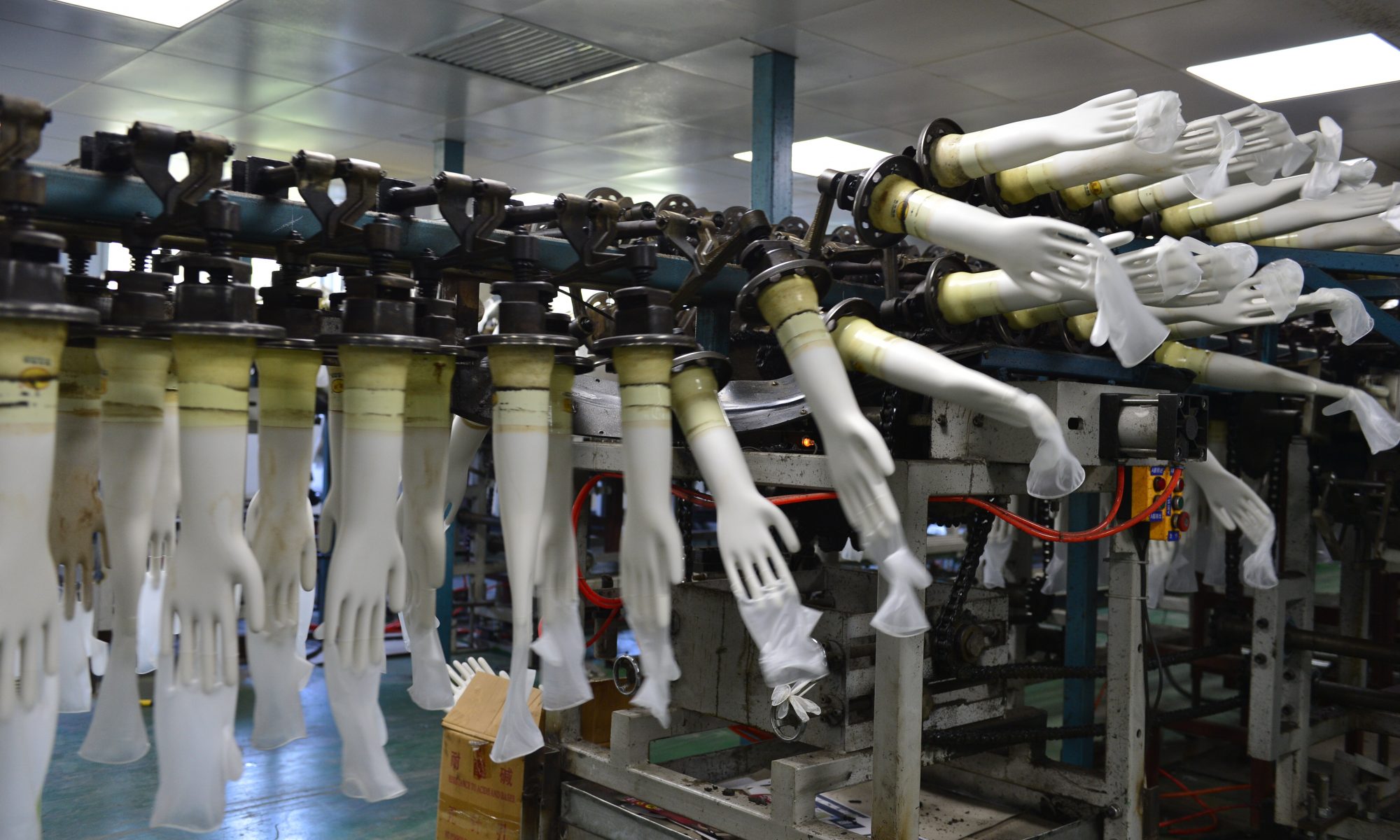
After preparation, manufacturers use hand-shaped molds, commonly called formers, to create the glove shape. The formers typically undergo cleaning to remove residues that could affect the final product. They may then pass through a coagulant treatment that helps the nitrile compound form a coating on the mold.
The formers enter the liquid nitrile mixture, allowing a layer of material to develop across their surfaces. The dipping conditions, compound properties, and production speed influence the resulting thickness. Some products require additional dipping or specialized treatments to meet their intended specifications.
Manufacturers may also create textured surfaces to improve grip. These features can be particularly useful when workers handle tools or equipment in environments where secure handling matters.
Curing, Washing, and Surface Treatment
Once the nitrile coating forms, the gloves move through a curing stage. Controlled heat helps the rubber develop its required physical properties. Temperature and curing time must remain within suitable ranges because inconsistent conditions can affect strength, flexibility, and overall quality.
Manufacturers may wash the gloves to remove residual processing chemicals and other unwanted substances. The washing process depends on the product design and manufacturing requirements. Some gloves also receive a surface treatment to make donning easier, especially when the finished product is powder-free.
These stages require careful process monitoring. Variations in washing, curing, or surface treatment can influence the final glove’s appearance, comfort, and performance.
Quality Testing in Nitrile Glove Manufacturing
Quality testing helps manufacturers determine whether finished gloves meet their product specifications. Inspectors may examine appearance, dimensions, thickness, and physical properties. Appropriate integrity tests can also help identify leaks or defects that could compromise the glove’s barrier function.
Testing requirements vary according to the intended use and applicable standards. Medical examination gloves, for example, may need to meet specific regulatory and performance requirements. Manufacturers must use suitable testing procedures and maintain records that support product quality claims.
For buyers comparing suppliers, glove quality control standards provide a useful starting point for reviewing documentation and product specifications.
Stripping, Packaging, and Final Inspection
After processing and testing, machines or workers remove the gloves from the formers. The gloves then undergo final checks before packaging. Manufacturers may inspect packaging labels, sizes, quantities, and batch information to ensure that products are correctly identified.
Packaging helps protect gloves during storage and transportation. Proper handling also reduces the risk of contamination before the products reach distributors or end users. Depending on the intended market, manufacturers may follow specific requirements for labeling, packaging integrity, and traceability.
Consistent control at every stage helps manufacturers produce nitrile gloves that meet defined specifications and remain suitable for their intended applications.